
Follow-Up
Should Contractors Text Customers? Rules and Best Practices
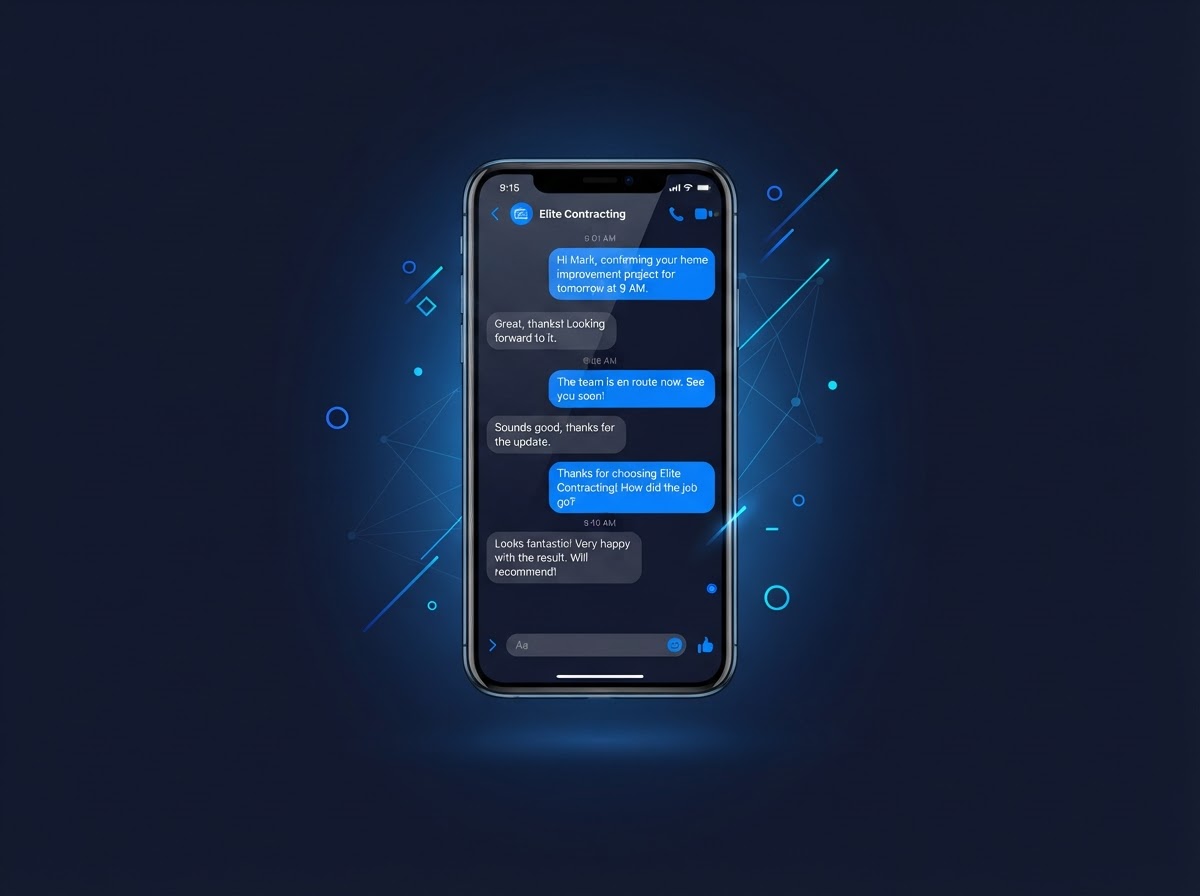
Texting is how most people want to communicate now. A homeowner with a leaking pipe would rather text you a photo than call and describe it. A lead who filled out a form on your site at 9pm would rather get a text reply than a phone call the next morning. If you are not texting your customers, you are making it harder for them to reach you, and you are losing jobs to contractors who do.
But texting for business is not the same as texting a friend. There are rules about how you get permission, how you register your number, and how you let people opt out. The good news is that the rules are straightforward, and once you have a system set up, the texting just runs in the background. Here is how to text your customers the right way, stay compliant, and win more jobs by being the contractor who actually replies.
Why customers prefer texting
Think about how you use your own phone. When a number you do not know calls you, you probably let it go to voicemail. When that same number texts you, you read it. Your customers are the same. A phone call feels intrusive, especially during the workday or after hours. A text is polite. It lets them read it when they have a minute, reply when they are ready, and refer back to it later when they need the details you sent.
For contractors, texting has a practical advantage too. You cannot always pick up the phone. You are on a roof, under a sink, or in the middle of a job. But you can glance at a text between jobs and reply in thirty seconds. Texting lets you keep the conversation moving without stopping what you are doing, and it lets your customer reach you without playing phone tag all day.
The data backs this up in a general way. Texts get read faster than emails, and people respond to texts more often than they return voicemails. If you are the contractor who texts back in five minutes and your competitor calls back in five hours, you win the job. That is the whole case for texting. It is not about being modern. It is about being the one who actually responds.
Getting permission first
Before you start texting customers, you need their permission. This is not a suggestion. It is the foundation of compliant business texting. If a customer hands you their number on a form, that is consent to contact them about their request. If you want to send them marketing texts later, like a seasonal offer or a referral campaign, you need separate consent for that.
The clearest way to get consent is to say what they are agreeing to. On your quote form, include a line that says something like, By submitting, you agree to receive texts about your request. For marketing, include a checkbox that says, Send me offers and updates. Keep a record of who consented and when. You do not need a complicated system for this, but you do need to be able to show that the customer agreed.
Do not assume that a number on a business card or an invoice means you can text. If you pulled the number off a receipt without the customer knowing you would text them, that is not clear consent. The rule of thumb is simple. If the customer would be surprised to get a text from you, you probably did not have permission to send it. Get consent, keep it clear, and you will not have problems.
Business texting registration in plain English
Carriers filter out texts that look like spam. If you start sending texts from a regular business number without registering it, some of your messages may never reach the customer. They get blocked or filtered into a spam folder, and you never even know it happened. The customer thinks you ignored them, and you lost the job without realizing it.
The way around this is registration. Carriers use a system called 10DLC, which stands for 10 digit long code, for businesses that send texts from local phone numbers. To use it, you register your business and your texting use case with the carrier network. This tells the carriers that your number is a real business sending real messages, not a spammer blasting thousands of random numbers.
You do not need to figure this out yourself. Your texting platform handles the registration on your behalf. When you set up a unified inbox with a dedicated business phone number, the registration is part of the setup. You provide your business details, the platform submits the registration, and once it is approved, your texts get delivered reliably. The point is that you should not text customers from an unregistered number and hope it works. Get set up right, and your texts actually reach people.
Registration also matters for compliance. When a customer opts out by replying STOP, the system records it and makes sure you do not text them again. That record is what protects you if a customer ever complains. A registered number with a proper texting platform gives you that protection built in.
What to text and when
The best business texts are short, clear, and sound like you. They are not marketing copy. They are a real person talking to a real customer. If you miss a call, a text saying, Hey, sorry I missed your call. This is Mike with Summit Electric. What can I help you with? is enough. It tells them you are real, you got their call, and you are ready to help. If they filled out a quote form, a text saying, Thanks for reaching out. I can take a look at that this week. What is the best time to come by? is enough.
The key is timing. Send the text within minutes, not hours. A lead that gets a text five minutes after filling out a form is warm. A lead that gets a text the next day is already cold. If you have an automated system that sends an instant reply to every form and missed call, you do not have to remember to do it. The system catches the lead and starts the conversation while you are working. For more on the importance of speed, read our post on how fast contractors should respond to leads.
For follow up, keep it light. One reminder a day or two after the first contact, and one more a few days later. Do not send a wall of text. Do not send five messages in a row. A short, friendly nudge that says, Hey, just checking in on that quote. Let me know if you still need help, and I will work around your schedule. That is it. If they do not respond after two, let it go. More than that just makes you look pushy.
For seasonal campaigns and referral requests, the same rules apply. Keep it short, make it useful, and give them a reason to act. A spring tune up reminder in March is helpful. A generic blast every week is spam. The difference is whether the message fits the moment. If it does, people appreciate it. If it does not, they ignore it or opt out. For trade specific examples, see our electrician marketing page.
Opt-outs and staying compliant
Every text you send for marketing has to include a way to opt out. The standard is a line that says, Reply STOP to unsubscribe. When a customer replies STOP, you stop texting them immediately and permanently. Not after the next campaign. Not after you finish the current job. Right then. Your texting platform should handle this automatically, but you should know how it works so you can be sure it is doing its job.
Keep records of consent and opt outs. If a customer ever complains that you texted them without permission, the record is what shows you had it. Your texting platform should store this for you, but it is worth knowing where to find it. The goal is not to be a lawyer about it. The goal is to text the way a good business should, with permission, a clear purpose, and an easy way out for anyone who does not want to hear from you.
Do not buy lists of phone numbers and blast them. Do not text people who never gave you their number. Do not send marketing texts to someone who only consented to hear about their specific repair. The rules are not complicated, and following them is not hard. The contractors who get in trouble are the ones who treat texting like a free for all. The ones who do it right build a list of customers who actually want to hear from them, and that list becomes one of the most valuable assets in their business.
Texting your customers is not optional anymore. It is how they want to be reached, and it is how you win jobs by being the first to reply. The rules exist to protect the customer, and following them is simpler than most contractors think. The Job Machine handles the registration, the consent, the opt outs, and the follow up, so you can text your customers the right way without thinking about the details. If you want to see how it works for your trade, we will show you on a quick call.
See it running on a real account
15 minutes. We show you the system live and tell you straight if it's a fit.
Book a 15-Minute CallFrequently asked questions
Can I just text any customer who gives me their number?
You should get clear consent first. A customer handing you their number for a quote is different from them agreeing to get ongoing marketing texts. Make it clear what they are agreeing to, and keep a record of it.
What is 10DLC and do I need it?
10DLC stands for 10 digit long code, which is the registration carriers use to let businesses send texts from local numbers. If you text customers from a regular business number for marketing or follow up, you generally need it. Your texting provider handles the registration.
How do I handle opt-outs?
When a customer replies STOP, stop texting them right away and honor it permanently. Your texting system should handle this automatically. Keep a record of the opt out and never message that number again without fresh consent.

Ryan Archibald
Avera Systems
Ryan helps contractors and home service businesses get more calls and booked jobs with websites, reviews, and follow-up built for the trades. He writes about what actually works when you are on the job all day and only have a few minutes to run your marketing.