
Getting More Calls
What to Put on a Contractor Business Card (and What to Leave Off)
Business cards feel old fashioned. In a world of websites, social media, and online reviews, handing someone a piece of cardboard can seem like a waste. But for contractors, the card is still one of the best marketing tools you have. It just has to be the right card.
The problem is that most contractor cards are forgettable. They have a name, a phone number, and maybe a logo, and they end up in a drawer or a glove box where nobody ever looks at them again. A good card does more than pass along your number. It wins you the next call and the next review. Here is what to put on it, what to leave off, and how a simple QR code turns a card into a review machine.
The must-haves
Start with the basics. These are the things every card needs, and skipping any of them makes the card useless. Your business name, exactly as it appears on your truck and your invoices. Consistency matters, and if your card says one name and your Google Business Profile says another, it confuses customers and search engines alike. Your phone number, and make sure it is the number you actually answer. If you have a dedicated business phone line, use that number, not your personal cell. Your email address, or at least a website address where people can reach you. Your website URL, printed clearly so someone can type it in if they are not scanning a code.
Your service area is worth including too. If you work in three counties, say so. It tells the customer you cover their town before they even call. A short list of your main services helps too, but keep it to the top three or four. Do not cram a paragraph of services onto the back in six point font. If someone wants the full list, that is what your website is for.
Your license number matters in trades where customers look for it. If you are an electrician, a plumber, or a contractor where licensing is a selling point, put it on the card. It tells people you are legit and that you did the work to get certified. A lot of your competitors skip it, which makes it an easy way to stand out.
What to leave off
Less is more on a business card. The most common mistake is trying to fit too much on it, until the text is so small nobody can read it without squinting. Leave off the long list of every service you have ever offered. Leave off the paragraph about how your grandfather started the business in 1962. Leave off the photo of yourself unless it is a clean, professional headshot and your face is part of your brand. Most contractor headshots on cards look awkward and do nothing to win calls.
Leave off the clip art. A stock image of a house or a wrench does not make you look professional. It makes you look like you used a template. If you want a visual element, use your logo or a clean layout. White space is not wasted space. It makes the card easier to read and more pleasant to hold.
And leave off the personal stuff. No personal social media handles, no personal phone numbers, no inside jokes. The card is for your business. Keep it that way. The goal is to make it easy for a stranger to trust you enough to call, and nothing on the card should work against that.
Adding a QR code for reviews
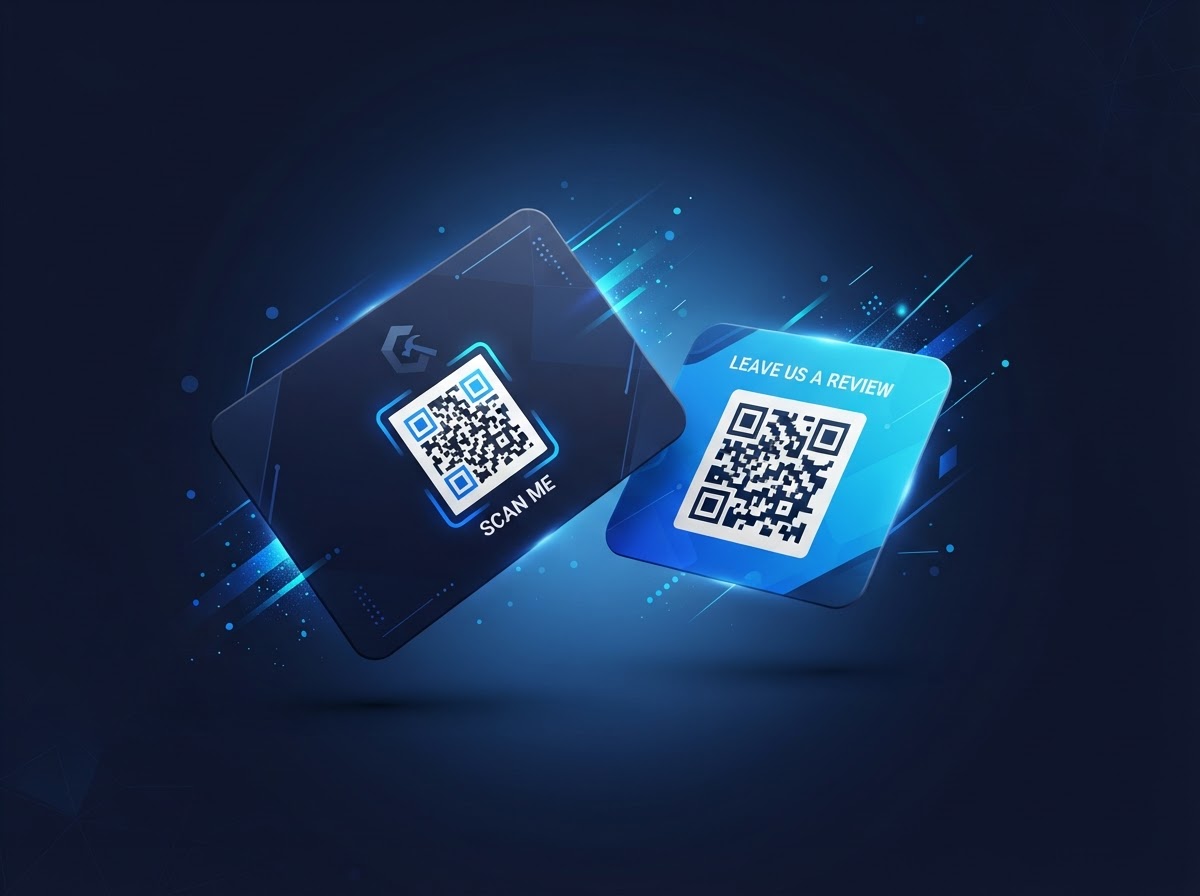
This is the part most contractors miss. A QR code on your card can send people straight to your Google review page. Instead of hoping a happy customer remembers to go find you on Google and leave a review, you hand them a card at the end of the job, they scan it with their phone, and they are on the review page before they even put their keys down.
The friction is what kills reviews. People mean to leave one, then they get distracted and forget. A QR code removes the friction. One scan, one review. It is the single highest value thing you can add to a card. If you want to see how this looks in practice, our Branded Print Kit includes review QR cards built for exactly this.
Put the QR code on the back of the card, with a short line like, Scan to leave us a review. Keep the front clean with your name and number, and use the back for the code and a call to action. Test it before you print a thousand of them. Scan it yourself, make sure it goes to the right page, and make sure it works on both iPhones and Androids. A broken QR code is worse than no code at all.
You can also use the QR code to send people to your website, your quote form, or your service area page. But if you only have room for one, make it the review link. Reviews do more for your business than any other single thing a card can drive, because they compound. One review leads to better rankings, which leads to more calls, which leads to more jobs and more reviews.
Yard signs, door hangers and truck magnets
The card is not the only printed piece that wins work. Yard signs work in neighborhoods where people can see your work from the street. A sign in the yard of a job you just finished tells every neighbor that you are the one doing the work. Door hangers work when you are canvassing a street or leaving a note after a job in the area. Truck magnets turn your truck into a moving billboard every time you park at a job site or the hardware store.
All of these should have the same things your card has, a clear name, number, and a way to take action. A QR code on a yard sign or a door hanger works the same way it does on a card. Someone walks by, scans it, and lands on your site or your review page. The easier you make it to reach you, the more people do it.
Keep the design consistent across all of them. Your card, your yard sign, your door hanger, and your truck magnet should all look like they come from the same business. Same colors, same logo, same font. That consistency is what builds recognition. When a neighbor sees your truck at one house and your yard sign at another, they start to recognize your name. That is when you become the contractor they think of first when they need work done. For more on how trades like painters use printed pieces to win jobs, see our trade pages.
Handing them out the right way
A card only works if you give it to people. The best moment is at the end of a job, when the customer is happy and you are standing in their driveway. That is when you hand them the card with the review QR code and say, If you were happy with the work, a quick review means a lot to us. You can scan the code right there. That moment, right after the job, is when you get the most reviews and the most referrals.
Keep cards in your truck, your wallet, and your tool bag. You never know when you are going to meet someone who needs work. The contractor at the next table at the diner, the neighbor who asks what you are working on, the person at the supply store who sees your logo and asks if you do residential. Every one of those is a chance to hand over a card.
And do not just hand them to customers. Leave a few with your suppliers, your real estate agent contacts, and anyone else who sends you work. A stack of cards at the counter of the place where contractors buy their materials is free advertising that keeps working while you are on a roof. The card is small, but it shows up in places your website never will.
A business card is not just a way to pass along your number. It is a small, tangible piece of your business that a customer keeps after you leave. Done right, it wins you calls, reviews, and referrals long after the job is over. The Job Machine includes branded cards and review QR cards as part of the system, so every job ends with a card that keeps working for you. If you want to see how it fits together, we will walk you through the whole thing on a quick call.
See it running on a real account
15 minutes. We show you the system live and tell you straight if it's a fit.
Book a 15-Minute CallFrequently asked questions
Do I still need business cards if I have a website?
Yes. A website is where people go to learn about you. A card is what you hand them in person, right after the job. The two work together. The card gets them to the site or your review page in one tap.
Should I put a QR code on my card?
A review QR code is one of the highest value things you can add. It turns a piece of paper you hand over at the end of a job into a direct path to a five star review, with no searching or typing required.
What size should the QR code be?
Large enough to scan easily from a few feet away, usually about an inch square. Too small and people will not bother. The goal is to make it effortless, not clever.

Ryan Archibald
Avera Systems
Ryan helps contractors and home service businesses get more calls and booked jobs with websites, reviews, and follow-up built for the trades. He writes about what actually works when you are on the job all day and only have a few minutes to run your marketing.