
Websites
Local SEO Basics Every Contractor Should Know
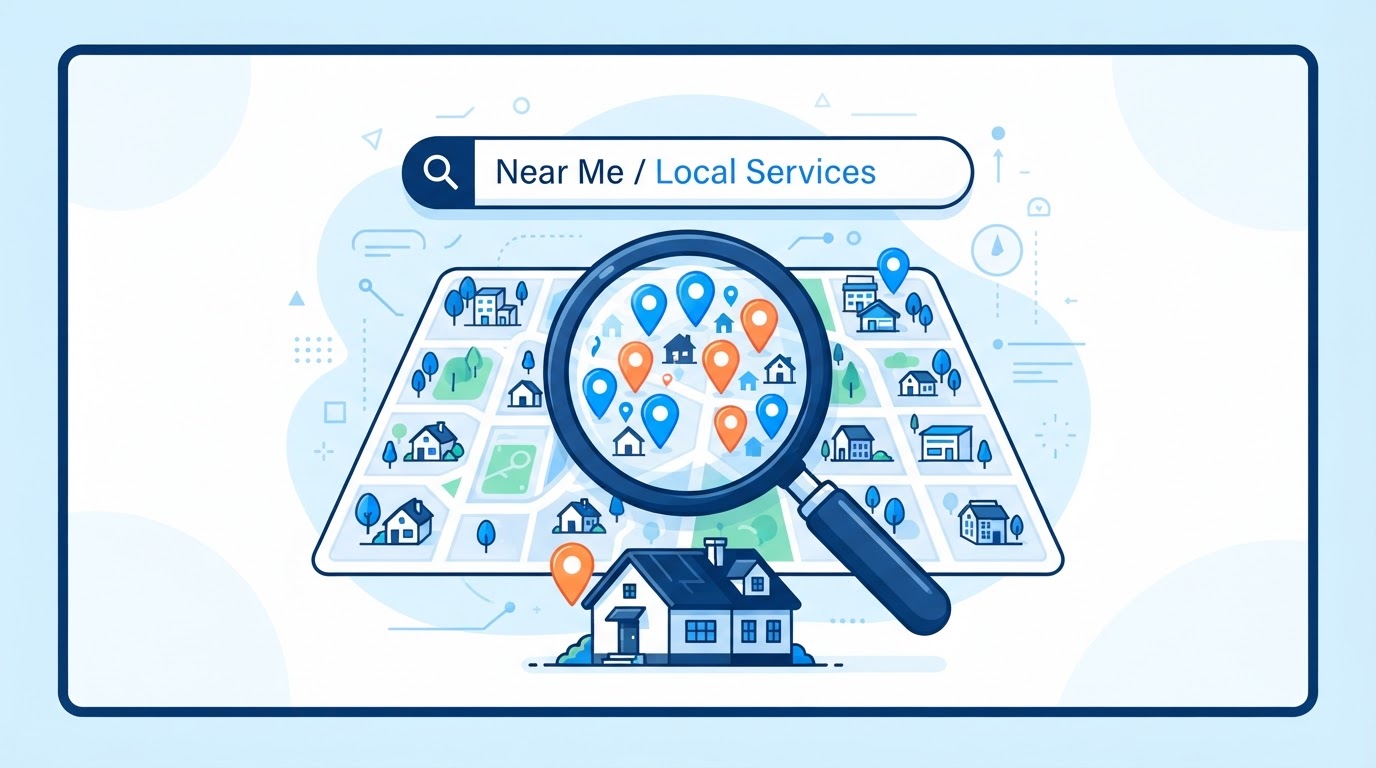
When a homeowner searches for a contractor near them, the results that show up first are not random. Google uses a set of signals to decide who to show, and those signals are what local SEO is all about. If you understand the basics, you can show up when it matters. If you ignore them, you are invisible to the people searching for you right now.
Local SEO is not complicated, but it does take some work and it takes time. The good news is that most of your competitors are not doing it well, which means a little effort goes a long way. Here are the pieces that matter and how they fit together.
How local search works
When someone searches for a contractor in their area, Google shows two kinds of results. The first is the map pack, those three listings at the top with star ratings and phone numbers. Those come from your Google Business Profile. The second is the organic results below the map, which come from your website. To show up in both, you need both pieces working.
Google decides who to show based on three main things: relevance, distance, and prominence. Relevance means your business matches what the person searched for. Distance means you are close to where they are. Prominence means you are a well known, well reviewed business. You cannot do much about distance, but you can do a lot about relevance and prominence.
The searches that matter most are the ones with local intent, like roofer near me or plumber in my town. Those are the searches where the map pack dominates, and where your Google Business Profile does the heavy lifting. Show up there and you get the call. Do not show up and the job goes to whoever does.
Your Google Business Profile
Your Google Business Profile is the single most important piece of local SEO for a contractor. It is what shows up in the map pack, it is what customers see when they search your name, and it is where your reviews live. If you do nothing else, claim and complete your profile. Local SEO starts here.
Fill out every field. Your business name, your phone number, your hours, your website link, your services, your service area. Add photos of your work, your truck, your team. Post updates every week or two so the profile looks active. The more complete and active your profile, the more Google trusts it and the higher it shows.
Your category matters a lot. Pick the one that best describes what you actually do, not the broadest one. A roofer should be a roofer, not a general contractor. The more specific your category, the more relevant you are to the searches that matter. If you offer multiple services, add secondary categories, but lead with your main one.
Service and service area pages
Your website needs pages for each service you offer and each area you work in. If you do roofing and siding, each gets its own page. If you work in five towns, each town gets its own page. This is not about padding your site. It is about giving Google something to rank for each specific search.
When someone searches for a roofer in a specific town, Google looks for pages that match. If you have a page about roofing in that town, it has a chance to show up. If all you have is a generic homepage, you compete with every other contractor for the same generic search. Specificity wins.
Each page should have real content, not just a sentence and a phone number. Describe the service, show photos of past jobs in that area, include your process, and make it easy to request a quote. The page should be useful to a human, which is also what makes it useful to Google.
Reviews and local signals
Reviews are one of the strongest signals in local search. A business with fifty recent reviews shows up higher than one with three old ones. Reviews tell Google that your business is active and trusted, and they tell homeowners that other people chose you and were happy with the work.
Ask every happy customer for a review. Make it easy by sending a direct link to your review page. Reply to every review, good or bad. A steady stream of new reviews does more for your local rankings than almost anything else you can do, and it is also one of the easiest things to automate.
Other local signals matter too. Your name, address, and phone number should be consistent everywhere they appear online. If your Google profile says one thing and your website says another, Google gets confused. Consistency across the web tells Google that all of these listings refer to the same business, which helps your rankings. For trade specific details, see our HVAC marketing page.
Citations and staying consistent
Citations are mentions of your business name, address, and phone number on other websites. They include directories, industry sites, and local chambers of commerce. Google uses them to verify that your business is real and that your information is accurate. The more consistent your citations, the more confident Google is in showing you.
The key word is consistent. If your business is listed as Mike's Roofing on Google but Mike Roofing on Yelp and Michael's Roofing on your local directory, Google has to guess whether those are the same business. Make sure your name, address, and phone number match everywhere. It is not glamorous work, but it matters.
You do not need to be on every directory, but you should be on the main ones and on any industry specific sites that apply to your trade. Claim your listings, fill them out, and keep them consistent. It is a one time effort with a long tail payoff.
Local SEO is not a one time project. It is a set of habits you build and maintain over time. Your Google profile, your service pages, your reviews, and your citations all work together to tell Google that you are the right contractor to show when someone nearby searches for what you do. The Job Machine handles the ongoing work for you, from profile management to review requests to monthly reporting, so your local presence keeps building whether you have time to think about it or not. If you want to see how it fits together, we will show you on a quick call.
See it running on a real account
15 minutes. We show you the system live and tell you straight if it's a fit.
Book a 15-Minute CallFrequently asked questions
How long does local SEO take?
It is not overnight. The basics can be set up in a few weeks, but rankings build over months. Your Google profile, reviews, and citations start working fairly quickly, while organic rankings take longer to climb. The work compounds, so what you do now pays off over the following months.
Do I need a website for local SEO?
Yes. Your Google Business Profile gets you into the map results, but your website is where you control the message, show your work, and capture leads. The two work together. A strong profile drives traffic, and a strong website turns that traffic into calls.
Is local SEO free?
The core pieces are. Your Google Business Profile is free, and on page SEO on your website costs nothing but time. Ongoing SEO like citations, content, and monthly reporting takes more work, which is why it is often outsourced. But the fundamentals do not require an ad budget.

Ryan Archibald
Avera Systems
Ryan helps contractors and home service businesses get more calls and booked jobs with websites, reviews, and follow-up built for the trades. He writes about what actually works when you are on the job all day and only have a few minutes to run your marketing.